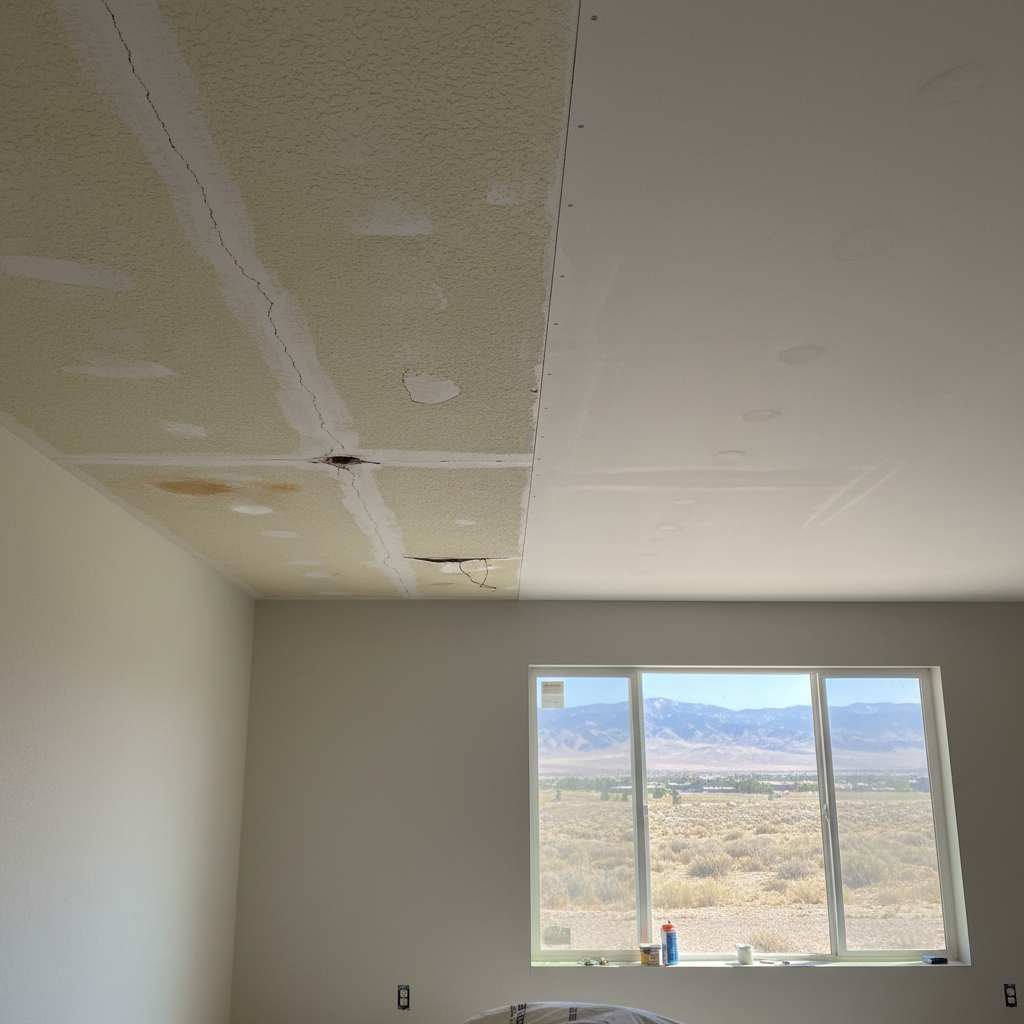
So, you're putting up new drywall on your ceiling, or maybe you're renovating and finally ditching that old popcorn. Now you've got a decision to make, right? Smooth finish or textured? It's not just about what looks good right now; we're talking cost, how long it'll last, and frankly, how much of a headache it'll be down the line. As someone who's hung more drywall than I care to count, I've seen both done beautifully and, well, not so beautifully. Let's dig into what you really need to know.
The Case for Smooth Ceilings
A smooth ceiling, which we often call a Level 5 finish, is exactly what it sounds like: perfectly flat, no bumps, no patterns. It's clean, it's modern, and it truly opens up a room. Think about those big, open-concept homes you see in places like the Pepperwood neighborhood – they almost always go with smooth ceilings because it just makes the space feel even bigger and more luxurious. Pretty neat, huh?
Appearance: This is where smooth ceilings truly shine. They reflect light wonderfully, making rooms feel brighter and much more spacious. They offer a timeless look, one that simply doesn't go out of style, unlike some textured finishes that can quickly date a home. If you're aiming for that high-end, contemporary aesthetic, smooth is definitely the way to go.
Durability: A well-done smooth ceiling holds up quite well. The drywall itself is the same, of course, but the finish is just paint. It won't chip or flake off like some textures can. However, because it's so smooth, every little flaw – every tiny ding, every slight wave in the drywall mud – will jump out at you. This means the installation has to be absolutely perfect, which leads me right to the next point.
Cost: This is usually where smooth ceilings get a bad rap for being expensive, and honestly, it's true. Getting a true Level 5 smooth finish is incredibly labor-intensive. It needs multiple coats of mud, extensive sanding, and a highly skilled hand. You just can't hide anything with paint. If you're tackling it yourself and you're not a pro, believe me, you'll see every mistake. For us at Progressive Drywall Inc, we spend a lot more time on a smooth ceiling to make sure it's flawless, and that extra time translates directly to a higher labor cost. Materials aren't much different, but the labor? That's significant.Maintenance: Cleaning a smooth ceiling is generally easier. A quick wipe with a damp cloth can often take care of dust or minor marks. But, if you get a crack or a water stain, repairing it to blend seamlessly with the rest of that smooth surface is tough. It often means repainting the entire ceiling to avoid visible patches.
The Case for Textured Ceilings
Textured ceilings come in many forms: knockdown, orange peel, skip trowel, and yes, the infamous popcorn. While popcorn is mostly a thing of the past for new installations, knockdown and orange peel are still very popular. Especially if you're trying to match existing finishes in an older home or just want a more casual look.
Appearance: Textured ceilings can add character and warmth to a room. A knockdown finish, for example, offers a subtle, softened look that many people find appealing. It's less formal than smooth and can help create a cozy atmosphere. It's also great for diffusing light, which can be a real plus in rooms with harsh overhead lighting.
Durability: Here's where texture has an advantage in one specific area: hiding imperfections. The texture itself helps mask minor flaws in the drywall installation, slight unevenness, or even small dings that might happen over time. This doesn't mean you can slack on the drywall hanging, but it's more forgiving than smooth. The texture itself, however, can chip if something hard hits it, and some textures do collect dust more readily.
Cost: Generally, textured ceilings cost less to install than smooth ones. The application process, while still needing skill, is less demanding when it comes to achieving absolute perfection. Fewer coats of mud are needed, and the sanding isn't as intensive. This means less labor time, which, of course, saves you money. For a typical Sandy home, if budget is your main concern, texture will usually win out.
Maintenance: Cleaning textured ceilings can be a bit trickier because dust and cobwebs can settle into those grooves. You'll need a soft brush or a vacuum with a brush attachment. On the flip side, repairs can sometimes be easier to blend. If you have a small patch or a crack, applying a matching texture to the repaired area can often hide the fix better than trying to perfectly match a smooth finish. It's a trade-off, really.
My Recommendation for Sandy Homeowners
Here's the deal: for most homes in Sandy, especially considering our sometimes-dry climate that can lead to some minor settling cracks over the years, a good quality knockdown texture is often the most practical choice. It offers a nice aesthetic, helps hide the inevitable minor imperfections that come with any house, and is more budget-friendly upfront.
However, if you're building a custom home, going for a high-end renovation, or simply prioritize that sleek, modern look above all else, then a Level 5 smooth finish is absolutely beautiful. Just be ready for the higher cost and understand that any future repairs will require a lot more finesse.
Ultimately, it comes down to your personal preference, your budget, and what kind of look you're trying to achieve. Don't let anyone tell you there's only one right answer. Just make sure you hire someone who knows what they're doing, no matter which way you go. A poorly done smooth ceiling looks worse than a well-done textured one, every single time. If you're in Sandy and want to talk through your options or get an estimate, give us a call at Progressive Drywall Inc. We're happy to help you figure out the best approach for your home.